
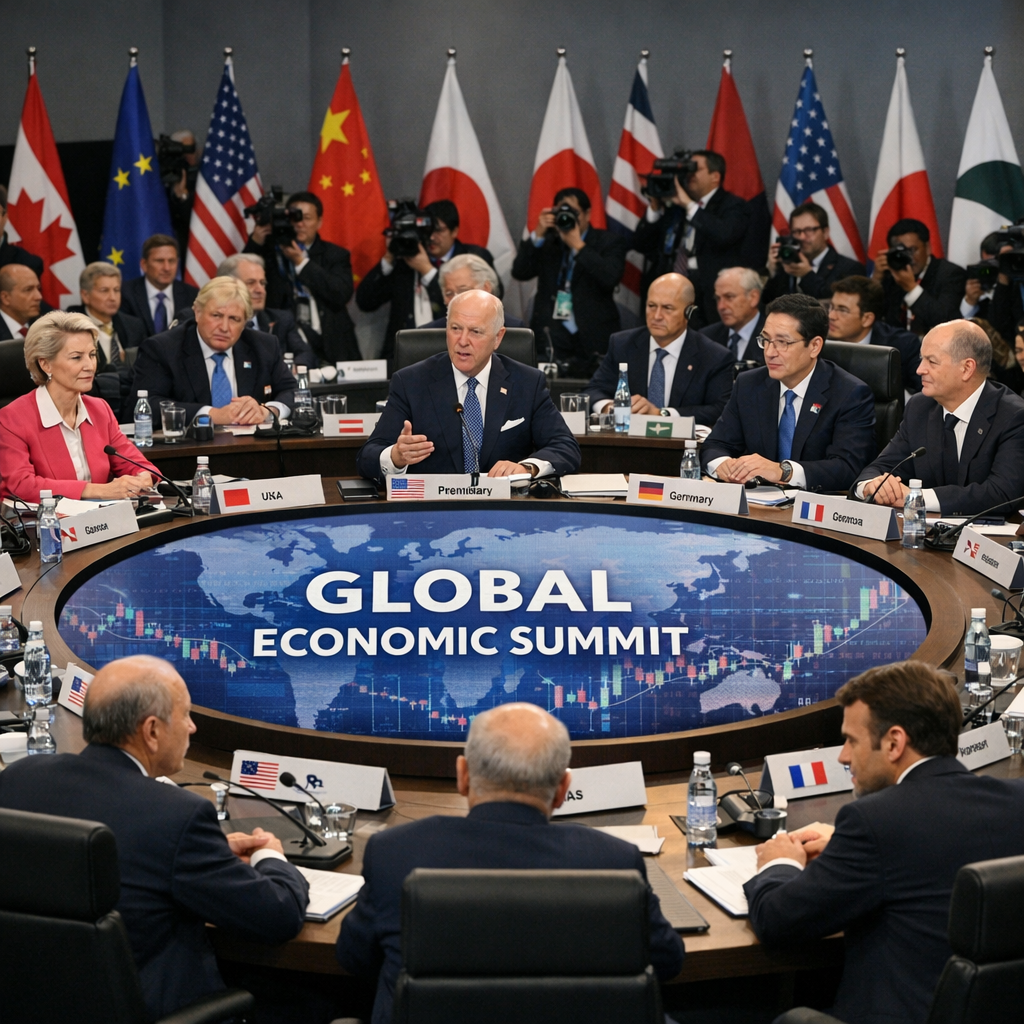
The global economy is currently navigating a complex landscape marked by geopolitical tensions, inflationary pressures, and varying growth trajectories across regions. Recent developments, particularly the conflict in the Middle East, have introduced new challenges that could impact economic stability worldwide.
Impact of Middle East Conflict on Global Growth
The International Monetary Fund (IMF) has highlighted that the ongoing war in the Middle East is disrupting global economic momentum and contributing to inflationary pressures. The IMF’s latest World Economic Outlook projects a slowdown in global growth to 3.1% in 2026, down from 3.4% in 2025. This revision reflects concerns over oil market disruptions and broader economic repercussions stemming from the conflict.
U.S. Economic Resilience
Despite global challenges, the United States economy demonstrates resilience. Factors such as robust consumer spending and significant investments in artificial intelligence are driving moderate growth. Morgan Stanley forecasts that U.S. growth will continue to be supported by these elements, even as global inflation moderates.
Inflation and Monetary Policy
Inflation remains a critical concern for policymakers. Government borrowing costs have surged to their highest levels in 22 years, driven by rising bond yields amid persistent inflationary pressures linked to the ongoing war in Iran. These elevated yields reflect investor expectations that inflation will remain high for an extended period, complicating efforts by governments and central banks to manage economic growth through lower interest rates.
Regional Disparities and Developing Economies
Developing economies face unique challenges in this environment. The World Bank reports that while some regions are showing resilience, others are grappling with structural issues and external shocks. Notably, about one in four developing economies remains poorer than in 2019, underscoring the uneven nature of the global recovery.
Conclusion
As the global economy contends with these multifaceted challenges, it is crucial for policymakers and stakeholders to remain vigilant and adaptable. Understanding the interplay between geopolitical events, inflationary trends, and regional disparities will be key to navigating the uncertainties ahead.